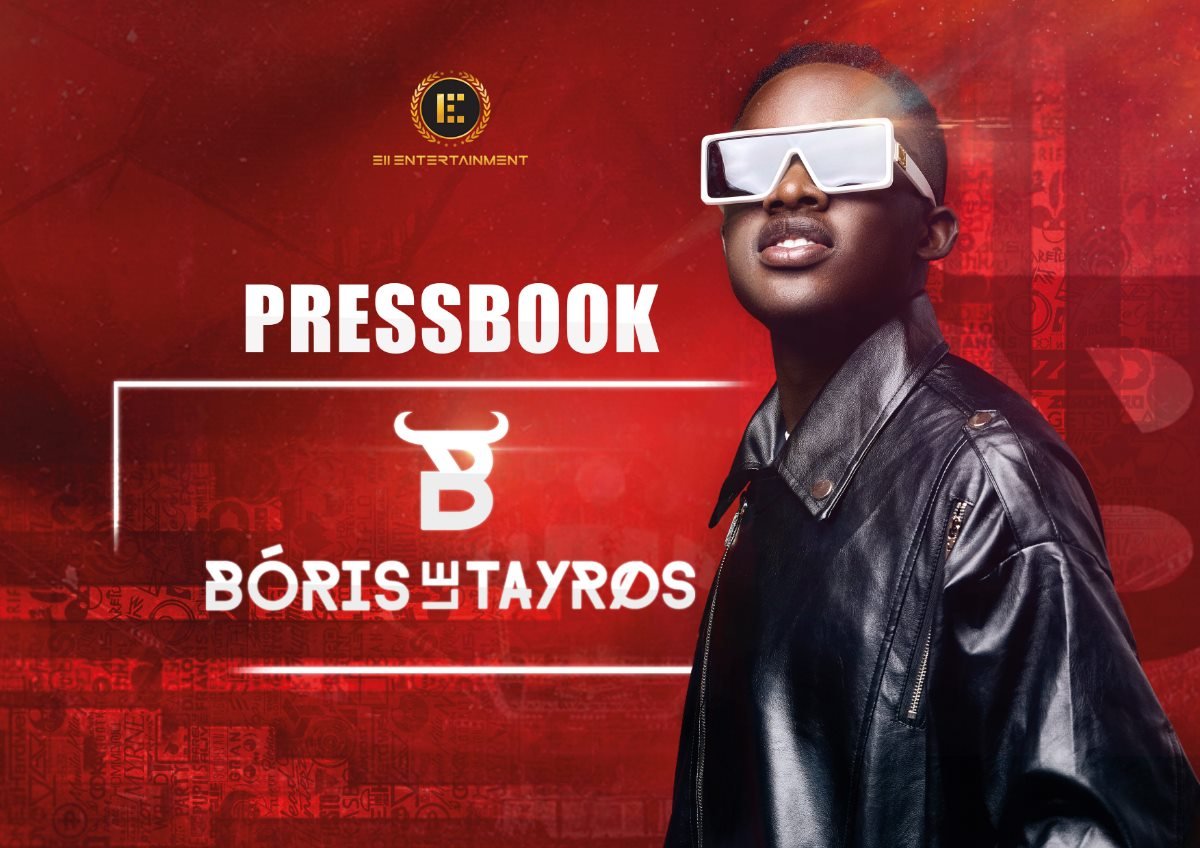
A promoter opens your pressbook on a phone, between two other messages, and decides in about fifteen seconds whether to keep reading. Most of the pressbooks I am asked to redesign lose that window in the first screen: a cover with no name on it, a biography that opens with three sentences of adjectives, and no indication anywhere of where the artist has actually played.
A pressbook is not a portfolio and it is not a fan document. It is a sales document with one job: to make a programmer, a journalist or a brand comfortable saying yes to you.
Know who is reading it
Three people receive your pressbook, and they want different things from it.
- A promoter or programmer wants to know whether you can fill their room and what it costs to put you on. They look for the live history first.
- A journalist or radio host wants a story and something to quote, plus a photo they can publish without asking permission.
- A brand or sponsor wants audience numbers and evidence that associating with you is safe.
One document can serve all three, but only if the information they each need is easy to find rather than buried in prose.
What belongs inside
- A cover that names you. Artist name, and what the document is. If someone saves it and opens it a week later, they should know whose it is without reading further.
- Two biographies. A short one of about fifty words that a host can read on air, and a longer one of around two hundred. Write both in the third person so they can be copied straight into a programme or an article.
- Music links that work. Streaming profiles and one or two specific tracks, not a folder of files. Check every link before you send it.
- Live history. Venues, festivals and dates. This is the section promoters read first and the one most often missing.
- Press and radio. Where you have been covered, with the outlet name visible. Two real mentions beat a page of logos nobody recognises.
- Audience numbers. Followers per platform and monthly listeners, with the date you measured them.
- Photos that can be published. At least one vertical and one horizontal, at full resolution, with the photographer credit next to them.
- One contact. A name, a phone number and an email. If you have a manager, their details replace yours rather than sitting beside them.
The biography problem
Most artist biographies I receive open the same way: a rising star with a unique sound and an undeniable presence. None of that is information. A reader cannot picture it, quote it or verify it.
Facts do the work instead. Where you are from, what you make, who you have worked with, what you have released and when, where you have performed. A promoter who reads that you played a specific venue last December learns more than one who reads that you are unstoppable.
Photos: what they need, not what you like
The photo you like best is often a tight, heavily edited portrait. What a publication needs is space around you for a headline, a version that survives being cropped to a wide banner, and a resolution that holds up in print.
Include the usage permission in the document itself: a single line saying the images may be used for press and promotion with the photographer credited. That one sentence removes the back-and-forth that delays coverage.
Be specific about numbers, or leave them out
Vague figures read as inflated ones. “Thousands of streams” invites doubt; a precise number with a date does not. If a platform number is modest, a strong engagement rate or a sold-out local show often makes a better case than the follower count.
Whatever you include, date it. An undated figure ages badly and makes the whole document feel stale.
Format it to actually arrive
- Send a PDF, not a folder of images and not a design file only you can open.
- Keep it under ten megabytes so it passes through email and opens on a phone on mobile data.
- Name the file properly. Your artist name and the year, not “pressbook final v3”.
- Make the links clickable inside the PDF. Nobody types a streaming URL by hand.
- Keep it short. Five to eight pages is enough. Length is not evidence of importance.
Treat it as a living document
A pressbook stops working the moment it is out of date. Put the month and year on it, and rebuild it after every release, every significant show and every piece of press. That is also the argument for designing it as a system rather than a one-off: a layout built on a clear grid and a defined type scale can absorb new content in an afternoon, while a document designed page by page has to be rebuilt each time.
Make the yes easy
Everything in a pressbook should reduce the effort required to book you, write about you or fund you. If a section does not help someone make that decision, it is taking up space that a photo credit, a venue name or a working phone number could use instead.
Need a pressbook that programmers actually read to the end? Tell me about your project here.